The $9 Shipping Trap: Why Hitting the Free-Ship Minimum Usually Costs More
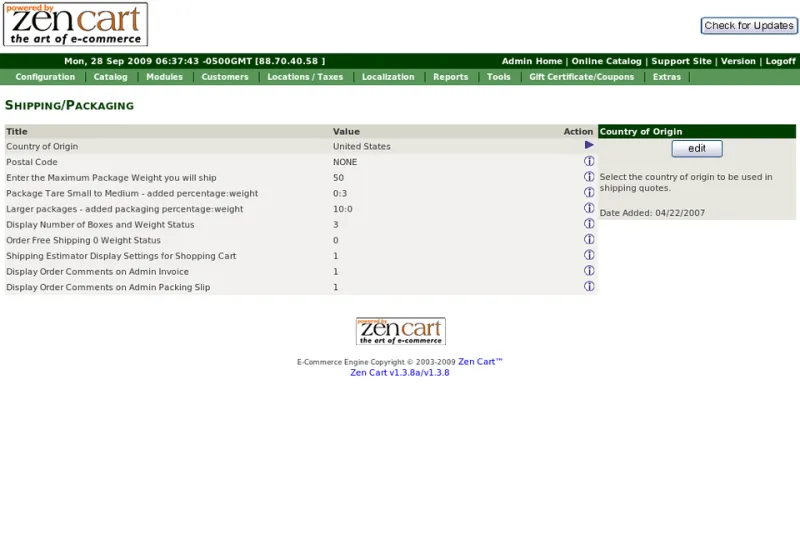
Photo: User 'it-software' at http://www.slideshine.de, CC BY-SA 2.0, via Wikimedia Commons
Free shipping is the most expensive phrase in online shopping. Not because shipping literally costs more—sometimes it does, sometimes it does not—but because the promise of $0 delivery has a way of turning a $34 cart into a $52 cart full of stuff you never wanted. In 2026, the progress bar is smarter, the add-on suggestions are pushier, and the threshold is still usually set a few dollars above the thing you actually came to buy.
The threshold is a shelf, not a finish line
US retailers do not pick free-shipping minimums by accident. A $35 minimum sits just above a $29.99 phone case or a $32.99 kitchen gadget. A $50 minimum lands right after a $44.99 sweater. A $75 minimum hovers over a $69.99 small appliance. The gap is the point. You are meant to notice it, and you are meant to close it.
That does not make the retailer evil. Shipping has a real cost, and minimums are a legitimate way to push bigger baskets. But you are not the retailer's basket. You are a person with a budget, and the only number that matters is the total you pay at checkout.
The total-cost rule that ends the debate
Before you add a filler item, run this rule: compare the all-in cost of the cart you have now, including shipping and tax, against the all-in cost of the cart after the filler, including tax and any fee the filler triggers. Then subtract what the filler is actually worth to you.
Example: Your cart is $31. Shipping is $7.99. Total before tax: $38.99. The store says you are $4 away from free shipping. You add a $5.99 phone stand. New total: $36.99, plus maybe $0.50 extra tax. You saved $7.99 in shipping and spent $5.99 on a stand you sort of need. Net savings: about $2.00. Fine. But if the filler is a $6.99 novelty mug you will never use, your real savings are negative once you count the clutter.
Example two: Your cart is $68. Shipping is $6.99. Free shipping starts at $75. You add a $9 item. New total: $77. Before, you paid $74.99. After, you pay $77. You spent $2.01 more and got a thing you did not plan to buy. The progress bar called that a win. Your bank account disagrees.
When paying shipping is the cheaper move
Paying for shipping is not a personal failure. It is often the rational choice. If the filler costs more than the shipping, skip it. If the filler pushes you into a higher tax bracket or triggers an oversize fee, skip it. If the filler is a duplicate of something you already own, skip it. If the only reason you are adding it is to make a bar turn green, skip it.
The math gets even clearer with low-price items. A $12 item with $5.99 shipping is a $17.99 purchase. Adding a $25 filler to hit a $35 minimum turns it into a $37 purchase. You did not save $5.99. You spent $19 more to avoid a $5.99 charge.
There is also the return problem. Filler items are often the first thing you regret. If you return the filler, some stores deduct return shipping or restocking fees. If you keep it, you own a thing you did not want. Either way, the free-shipping win gets smaller.
The 2026 progress bar is a persuasion machine
Free-shipping bars have gotten better at their job. They use goal-gradient psychology: the closer you get to a target, the faster you want to close the gap. A bar that says 'You are $6 away' feels urgent. A bar that says 'Add $6 for free shipping' feels like a puzzle. A bar that says 'Free shipping unlocked' feels like a reward, even if you just spent $20 to get there.
Retailers also use anchoring. The threshold becomes the reference point, not your original budget. You came in willing to spend $30. Suddenly $35 feels responsible. Then the add-on suggestions appear: 'Complete your order,' 'Frequently bought together,' 'Only $4 more.' These are not neutral recommendations. They are merchandising.
In 2026, watch for a few specific tricks. Some stores count the threshold after discounts, so a coupon can drop you below the line. Some exclude oversized items, marketplace sellers, or certain brands. Some offer free shipping for loyalty members but charge everyone else. Some show a progress bar that includes estimated tax, which makes the gap look smaller than it is. Read the shipping policy, not just the bar.
A simple three-question test
Before you chase free shipping, ask three questions. First, would I buy this filler at full price on a normal Tuesday? If no, do not add it. Second, is the filler worth more to me than the shipping I am avoiding? If no, pay the shipping. Third, does the total stay under the number I set before I opened the site? If no, walk away or remove something.
That last question is the one most people skip. Set a total-cost ceiling before you shop—$40, $60, whatever fits your budget. Treat shipping as part of that ceiling. If the only way to hit free shipping is to break your ceiling, the free shipping is not free.
The bottom line
Free-shipping thresholds are suggestions dressed up as savings goals. Sometimes they work in your favor, especially when the filler is something you genuinely need and the math actually saves money. But a $7 filler added to save $9 in shipping is not automatically a deal. Run the total, value the filler honestly, and be willing to pay $6.99 for shipping like a grown-up. Your cart will be smaller, your closet will be less crowded, and your bank account will probably be happier.